
The Foundation of Robust Journalism: Fair and People-Oriented Journalist Organizations
I have been intimately associated with the media of Bangladesh for nearly 28 years. It always feels to me that the country's press is moving forward through various trials and tribulations.
Written by Md. Kamrul Islam
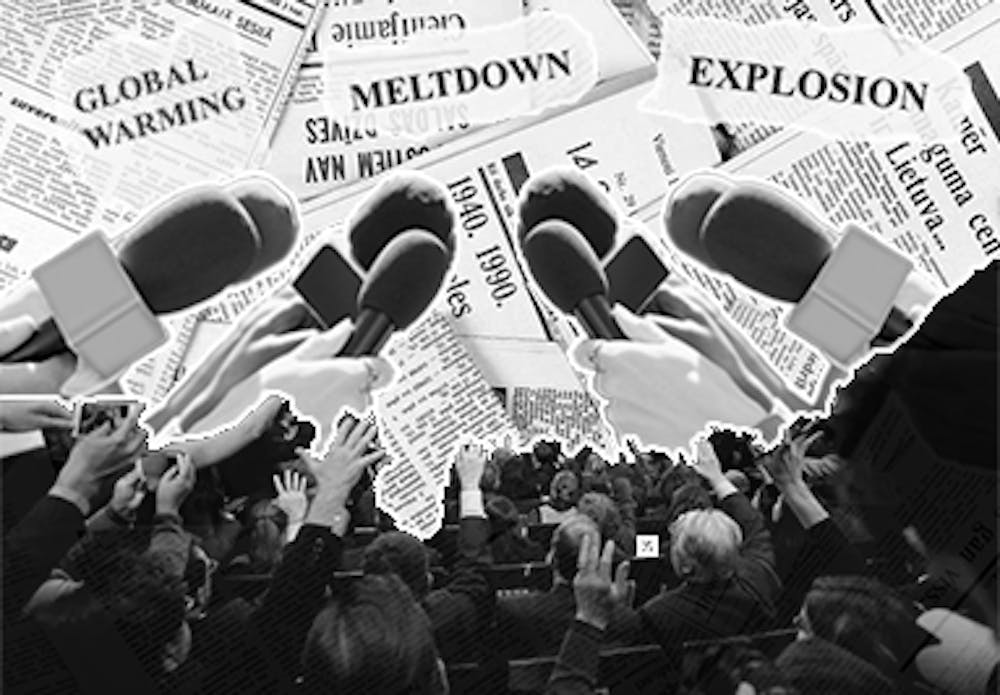
I have been intimately associated with the media of Bangladesh for nearly 28 years. It always feels to me that the country's press is moving forward through various trials and tribulations. In the context of Bangladesh, the phrase 'Free Journalism' often appears to me as merely an eloquent expression.
Since their inception, I have observed various national dailies relentlessly striving to present themselves as truthful and neutral to their readers through various slogans. Here are a few such melodious and hopeful phrases: 'We are for the people,' 'The whole truth, not a part,' 'Truth is courage,' 'Fearless in the pursuit of truth,' 'The fierce courage of uninhibited expression,' and 'The echo of the free soul,' among others. These slogans attempt to highlight the positive aspects of all media outlets. But is the reality truly so?
Many media houses have been relegated to the pages of history solely for their writing, for publishing news, or for not siding with the government. They have been forced to accept various injustices and oppressions as their destiny. Governments change, policies change, but every regime has attempted to present the word 'media freedom' in its own way.
I have witnessed the forms of so many governments in this life: Presidential, Parliamentary, Democratic, Undemocratic, Autocratic, Military, Dictatorial, Caretaker, Interim. I have seen overnight transformations following a change in government, and I have seen the media transform as well. Truly, 'Alas, Seleucus!'
Whatever the overall character of the media may be, the character of the journalist organizations is somewhat contrary. The political division among journalists is clear, reflecting the country's ongoing politics. However, the elections for organizations like the National Press Club, Dhaka Reporters Unity (DRU), Bangladesh Crime Reporters Association (CrAB), or Economic Reporters Forum (ERF) are always festive. They resemble the atmosphere I witnessed during the National Parliamentary Elections of 1991, 1996, and 2001.
Personally, I have observed the elections of the National Press Club, DRU, and CrAB up close for about 15 years. An election means a great festival, a reunion. The selection of leadership is a strictly internal matter, but the organization belongs to everyone; there is no scope for partisan dominance. I have seen those who tried to assert partisan dominance end up living a secluded life, detached from the party, or even having to leave the country.
Robust journalism requires strong institutions. DRU, National Press Club, CrAB, ERF, and many other journalist organizations are examples of this. The festive atmosphere of the elections or the annual Family Day creates a wonderful environment, from which those involved in national politics can draw a clean, refreshing breeze. Many journalists involved in national politics, who sacrifice their identity for the hope of position and status to become 'more than politicians,' are quick to do so, yet they find themselves in the dustbin of the breakaway group when the context changes.
Despite numerous limitations, challenges, and risks, the journalism profession in Bangladesh continues to act as the conscience of society. Professional organizations play an extremely important role in protecting the professional unity, security, development, and rights of these professionals.
Among them, Dhaka Reporters Unity (DRU), National Press Club, Bangladesh Crime Reporters Association (CrAB), and Economic Reporters Forum (ERF) are particularly notable. The elections of these organizations, held annually or at a specified time, are not just about electing a committee—they are a crucial example of democratic practice, professional identity, and healthy competition within journalism.
The electoral process in these organizations is generally transparent, participatory, and conducted through the direct votes of the members. The submission of nomination papers, scrutiny, candidate introduction, and manifesto presentation all proceed within a controlled, systematic framework. Although the journalistic community may be divided, professional camaraderie is maintained in most cases during elections. This is a manifestation of the democratic spirit, which can serve as an example for professional bodies across the country.
A festive atmosphere often surrounds the elections. Posters, banners, and leaflets of candidates at the Press Club premises turn the entire area into a kind of fair or reunion. Even in the busy city, journalists come together to uphold the dignity of their profession. Many meet old colleagues after years, talk, and renew relationships.
It's not just a vote—it's a form of social reunion for the journalistic community. There is competition, but it remains within the bounds of professionalism. It is notable that while the competition is intense, it is generally civil and professional. Candidates from different panels present their action plans, prioritizing issues like workplace safety, welfare funds, training, international opportunities, professional development, and the fair rights of members. This healthy competition keeps the organizations dynamic.
Amidst all the positive aspects, some criticisms cannot be denied. There are allegations of factionalism and the influence of unannounced syndicates in some organizations. Young journalists sometimes feel that leadership positions are not entirely open to newcomers. Others argue that more emphasis should be placed on solving real-world problems than on the festive nature of the election. However, it is also true that criticism helps organizations mature and strengthens the democratic framework.
The elections of DRU, National Press Club, CrAB, and ERF are not merely processes for choosing new leadership; they are symbols of the inherent democratic strength of the journalistic community. Such festive, systematic, and participatory elections prove that journalists do not just report the news; they also uphold and practice democracy, and through that practice, they make their organizations stronger.
The stronger the journalism in a country, the stronger its democracy. And robust journalism is built upon strong, fair, and people-oriented journalist organizations—that is the true message of these elections.

Written by
Md. Kamrul Islam
Journalist